I love High Potassium and High Phosphorus Foods – What Can I Do?

When I was initially diagnosed with kidney failure my nephrologist asked if I drank Diet Coke. I said yes, and indicated that I frequently drank a dozen cans a day while working. He told me that Coke is the only soft drink that actually adds potassium as part of their recipe. And, since all colas are mode from cola beans, they are also very high in phosphorus.

I also love Italian food, potatoes, fresh fruit and vegetables, seafood, etc. All of these items also contain potassium, some at very high levels.

While dialyzing in-center a fellow patient told me how to tell what foods are high in potassium and phosphorus – if it grows, it’s high in potassium. If it tastes good it’s high in phosphorus.

Luckily, there is plenty of information online about the potassium and phosphorus levels of almost any food you can name. Here is one that I used frequently:

https://www.med.umich.edu/1libr/Nutrition/PotassiumHandout.pdf

https://www.med.umich.edu/1libr/Nephrology/Nutrition/UMHS_HighPhosphorusFoods.pdf

So, the bad news – I now know what foods are high in potassium and phosphorus, what can I do if I love these foods?

Dialysis removes potassium and a small amount of phosphorus. Never miss a treatment. By dialyzing six days a week at home, I have the ability to be much more flexible with my diet, and foods that contain potassium and phosphorus.

Meal planning goes a long way in allowing me to eat more potassium. When I crave a food high in potassium I eat them four to six hours before I dialyze, and the high potassium gets taken out of my blood almost as quickly as it enters it. Since I dialyze at 6:00 PM each evening after my wife returns home from work, I eat these types of food for lunch.

When I crave a high potassium food for dinner and know I won’t be dialyzing until 24 hours later, I used a prescription potassium binder called Kayexecelate. I only do this once or twice a month, but it provides me with just enough freedom to adhere very closely to my low potassium diet. My potassium level in my last monthly lab work was 4.5, well within the guidelines for the range of safe potassium blood levels. This works for me, but the use of Kayexcelate like this must be discussed with your nephrologist before using it in this way.

The most important thing to remember about potassium, both high and low levels are very dangerous for your heart.

Phosphorus is a different story. Even with daily dialysis, I still need to use a prescription phosphorus binder every time I eat. I have used Renegal in the past, and now use Renvella. These drugs can be very expensive, but without them you endanger your health.

Once on a two-day vacation with my wife, I forgot to pack Renagel. I stopped at a local pharmacy and purchased TUMS Ultra 1000 antacid tablets, and took them with each meal. These can be a used in an emergency to lower your blood phosphorus. But, in my case, use for more than a day or two also raised my calcium levels too high. Like any drugs, use of antacids as a phosphorus binder needs to be discussed with your nephrologist before any such changes.

I vary the amount of phosphorus binder I take with each meal, based on the amount of phosphorus in my meal. With a normal meal I use four 800Mg Renvella tablets. With a high phosphorus meal I will take seven Renvella tablets. After asking my nephrologist about the side effects of too much binder, he replied constipation. So, there is a balancing act with changes in dosage. My last phosphorus blood level was 4.5, also well within the guidelines for the range of safe phosphorus blood levels.

I am not providing medical advice. If you are considering any of the changes I have described, you must discuss them with your nephrologist prior to making them. But for me, sometimes “cheating” on my diet with foods higher in potassium or phosphorus allows me to closely adhere to a diet low in them the rest of the time.

With Thanksgiving only a couple of more days away, I know I will be enjoying a nice helping of mashed potatoes and gravy and my potassium level on Friday will still be normal.
Standard

Add One More Step To Setup – Exercise Your Fistula

I setup my NxStage System One six times per week, every week for four and a half years. I am pretty good at it and can start and complete the entire setup in about 40 minutes. One additional item I do every day as part of my setup is exercise my fistula.

Right after I had the fistula surgery, both the surgeon and technicians at the dialysis center advised me to exercise my fistula using a squeeze ball. They indicated it would help develop my fistula so I could begin using it sooner.

Like most exercises I have ever started, once I was successfully using my fistula I stopped doing the exercises. Over time I decided I should continue them to ensure my fistula stays in great condition. For those of us on hemodialysis, it’s truly our lifeline.

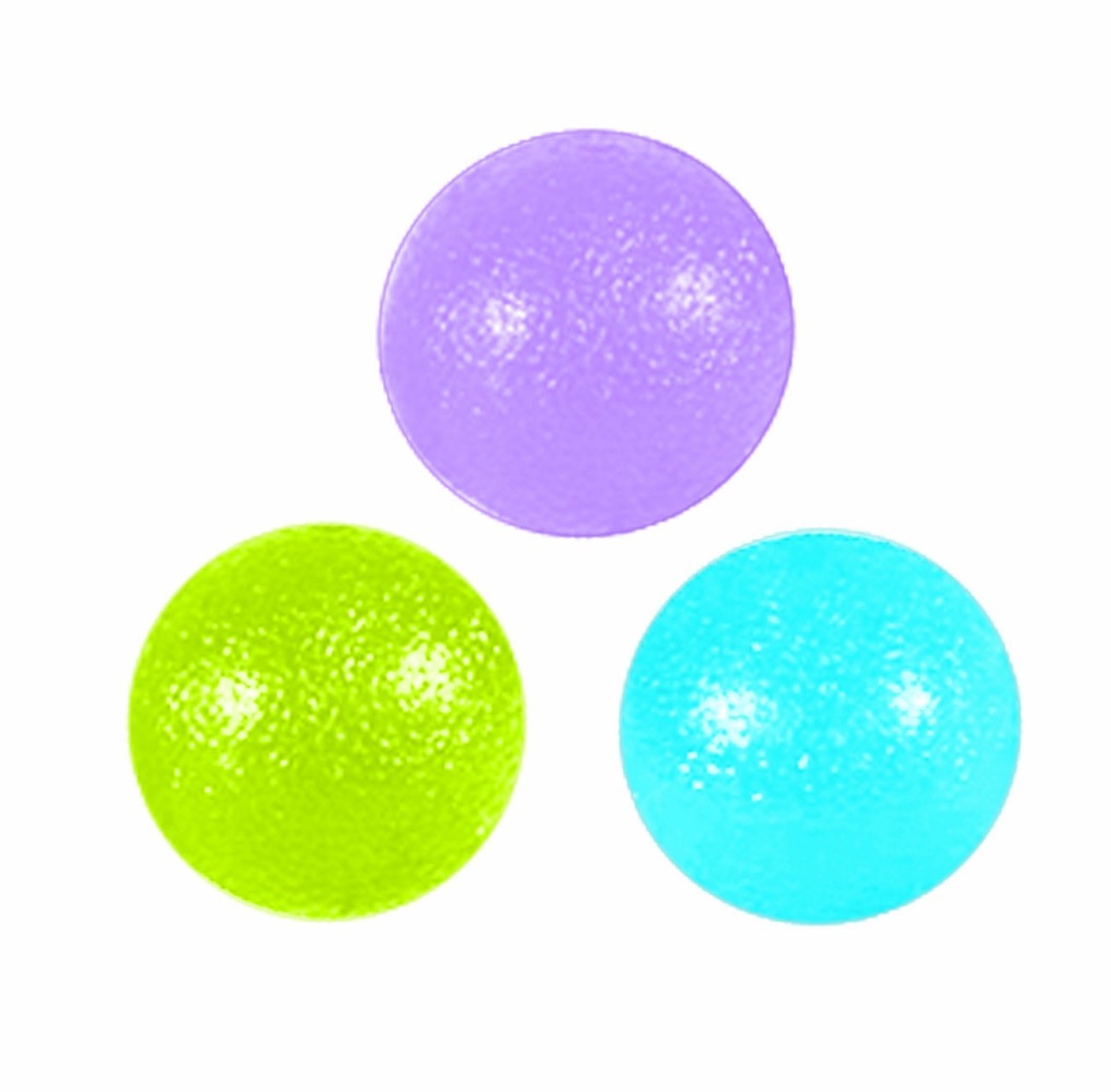
I use a set of exercise balls from Gaiam that I found at Amazon.com. It includes three balls of varying resistance (low, medium and firm). I most frequently use the medium resistance ball. I complete 25 repetitions with each hand, and repeat that 10 times, for a total of 250 repetitions each time I dialyze.

Giaim Balls

This may sound like a lot, but it adds less than five minutes to my setup time. And, in addition to improving and protecting my fistula, it has almost completely eliminated the ongoing pain I had in both hands from severe arthritis.

Do yourself a favor and add this one additional step to setup.

Standard

Have Your Fistula Checked

I have a button-hole fistula, I had the fistula surgery in 2009 and began using it after about three months. I used it with no issues over the next year while I dialyzed in-center three time per week.

I began research into home hemodialysis using the NxStage System One, and decided I would prefer to use home hemo instead of in-center hemo. I also decided I would need a button-hole fistula to easily allow me to insert my own needles for home hemo.

My button-hole fistula was created by a Master Phlebotomist. Sharp needles are carefully placed for the best blood flow, then I dialyzed like normal. The same Phlebotomist inserts the sharp needles in the same holes she initially created each time I dialyzed for about 12 to 15 more times. This forms scar tissue to allow the use of dull fistula needles.

This also allows my fistula to last longer, sharp needles cause damage to the skin over the fistula and to the fistula. My button-hole fistula will allow it to last longer, provide me with much easier methodology for needle insertion, and for me, dull needles are MUCH less painful than sharp needles.

Three days ago I had my fistula checked by an arterial surgeon. After over four years of use I was having trouble placing my arterial needle. I was sure I didn’t have a clot, but couldn’t seem to find the proper track to insert the needle.

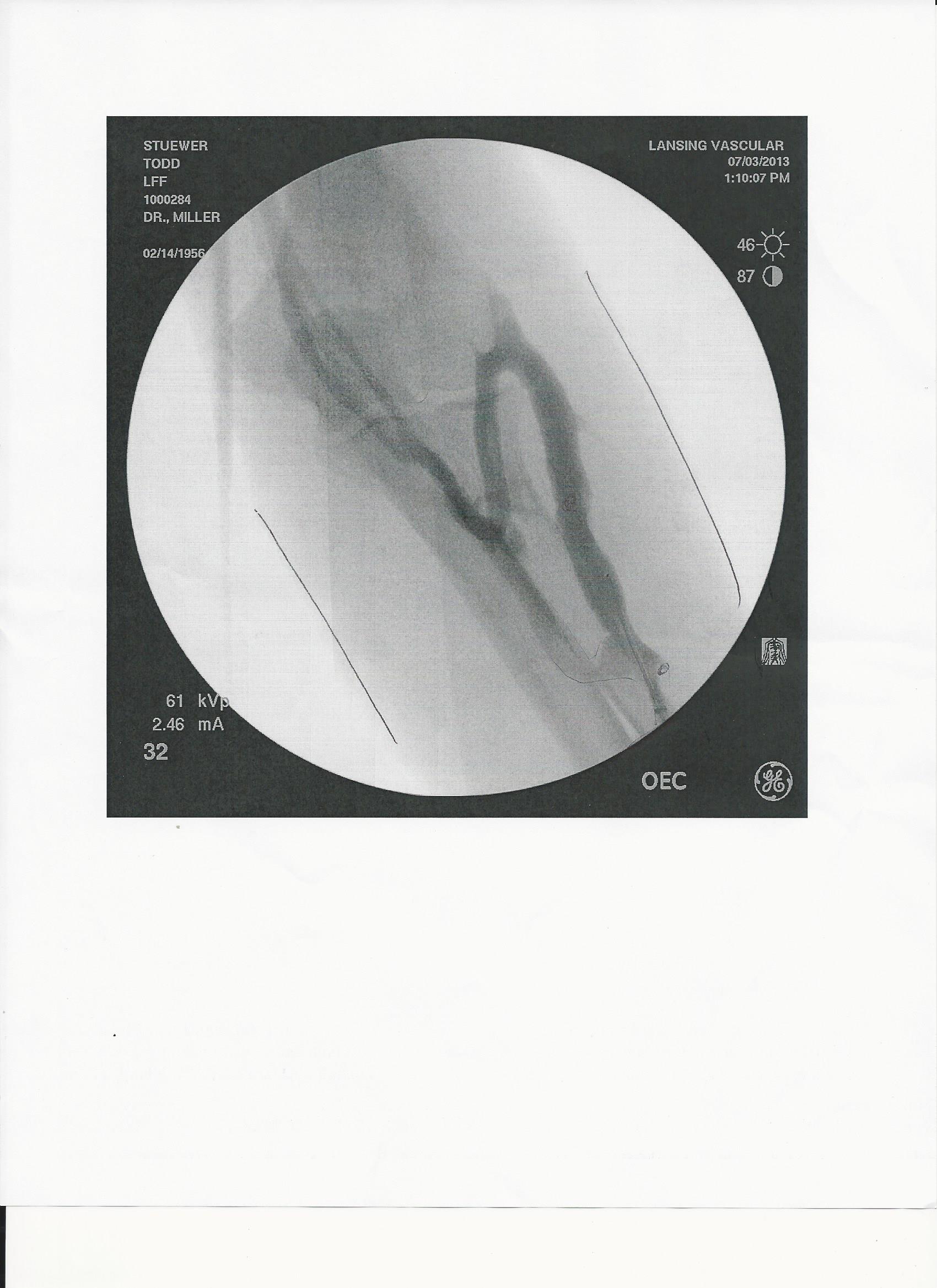
I called my dialysis nurse to discuss the problem I was having and she asked me to come in to check my fistula. She listened to it with a stethoscope and it sounded normal. She had me hold a needle and demonstrate the angle I used to insert the needle, and my “turn” (I have an unusual fistula that quires me to insert the needle about halfway, then perform about a 45 degree turn, before continuing the full insertion of the needle (See picture of my fistula from the arterial surgeon below).

Fistula

She felt that I was not getting the proper final angle to complete the needle insertion. That night I used the angle she suggested and got the needle in much more easily. And, like usual, I ran at my normal run speed of 500.

She asked me when I last had my fistula checked by an arterial surgeon. I replied that I had not seen one since I had a clot removed in the venous portion of my fistula over 18 months ago. She was surprised and said I should have it reviewed periodically and made an appointment with the vascular center.

The arterial surgeon did an ultra-sound of my fistula, compared it to the photo taken during my prior visit, discussed the issues I was having and determined that my fistula was in great shape.

He described that button hold fistulas have a flap of skin at the end of the scar tissue, and that the flap had to be moved out of the way while inserting the dull needle, and that scar tissue changes over time. I was simply having some problems accounting for the changes in scar tissue. After reviewing the photo of my fistula with him, I am right back to easily inserting the needle.

He also told me I should have my fistula checked every six months to verify it is working properly, and to prevent having problems in the future. I now have my next review appointment scheduled.

He also provided me with the following important information about the three conditions for fistulas:

Green – All Clear – Everything is normal, keep up the good work

Normal thrill (vibration)

Blood flow rates normal

Venous pressures normal

Arterial pressures normal

Bleeding less than 15 minutes after dialysis

No problems getting needles in

No pain, redness or swelling

Clearance labs normal

Yellow – Caution – Ask dialysis nurse for referral to vascular center

Thrill (vibration) weaker

Hard to get needles in

Frequent alarms on machine

Bleeding more than 15 minutes after dialysis

Pulling clots during needle insertion

Inadequate dialysis (clearance)

Low blood rates

Cold or painful hand during dialysis

Arm or hand swelling

Red Zone – Access emergency – Contact vascular center immediately


Clotted access (no thrill/vibration)

Can’t put needles in

Broken or clotted catheter

Drainage at needle sites or incision

Signs of infection:

  • Redness
  • Swelling
  • Pain
  • Skin warm to the touch

It’s pretty simple to avoid any of these problems by simply having it checked periodically by an arterial surgeon.

Standard

Common Dialysis Problem – I’m Cold During Dialysis

I live in Mid-Michigan, it’s 6:00 PM on November 15, it’s 0 degrees outside, and 69.4 inside, as usual, I’m freezing as I dialyze. I adjusted the heat on my Pureflow to 20, the maximum setting, but I’m still freezing.

Why am I so cold? My saline is at room temperature, over 29 degree below my body temperature, and my blood volume is lower by the amount of blood circulating in the NxStage System one.

What else can I do? The best solution that I found to this problem is a Sunbeam Electric Throw. It was only $19.99 at Wal-Mart, the best $19.99 I have ever spent! If you don’t live near a Wal-Mart, I also found these on Amazon.com.

It’s large enough to cover me from chest to toe, but small enough to easily put on and use will I’m connected. (I have a button-hole fistula and use dull needles, so I have quite a bit of movement of both arms without the fear of infiltration). I considered a twin size blanket, but it was too large to use comfortably, and higher in cost.

The throw has three setting – Low, Medium and High. I use High when I first start, soon lower it to Medium, and eventually get to Low before I need to come off. For me this has been a great solution. I’m on my second Sunbeam Electric Throw. I wore out the first one after about four years of use, so it was still a great buy.

The other thing I have learned to do is place my liter bag of saline on a register for about an hour before I start the prime on my NxStage System One. This brings the temperature of the dialysate up to a much more comfortable temperature before I use it. If I will be away from home for an extended period of time before I return and setup for dialysys, no problem – I just leave the saline on the register for as long as I will be gone. The register doesn’t provide too much heat.

A word of warning – DO NOT HEAT DIALYSATE IN THE MICROWAVE, it changes the dialysate and would be dangerous to use. I know PD patients heat their dialysis fluid using a microwave, but hemodialysis dialysate is different and this method cannot be used.

For any of you that have the same cold problems I do, I hope these suggestions help.

Standard

NxStage Home Hemodialysis Users

I have been a NxStage System One home hemodialysis patient for almost four and a half years.

I dialyzed at a Fresenius Dialysis Center for almost a year and a half before learning of home hemodialysis using the NxStage System One and the Pureflow unit for making dialysate.

I received three and a half weeks training at Fresenius, and ran at my home for the first time on June 1, 2010 using the NxStage and Pureflow units.

I have had wonderful success with these machines and highly recommend considering this type of home hemodialysis for anyone current enduring center-based hemodialysis now.

In center I dialyzed three days per week for 3.5 hours per treatment. Today I dialyze at home six days per week for approximately 2.25 hours per treatment.

People frequently ask me why I chose to take on the responsibility for home hemodialysis, and my answer is easy – I feel like a person with an almost normal life again.

I feel better, have more energy, I have normal blood levels for potassium, phosphorus, albumen, and am able to do normal physical activities after I complete dialysis.

During in-center dialysis I was so tired when I finished, I hardly had the energy to drive myself home and just crash for the rest of the day.

The difference now with NxStage is so different and better it almost defies explanation.

I am new to blogging, so please bear with me as I learn and get more experience with this, but I will continue to post my experiences using NxStage equipment, home hemodialysis, and the things I have learned (many the “hard way”) while dialyzing.

Standard